
In this article
The best things to do in Anjuna are watching sunset from the cliffs above Anjuna Beach, browsing the Wednesday flea market in season, spending slow mornings in the village's cafés and driving 10–15 minutes north to Vagator Beach and Chapora Fort. Anjuna is quieter than Calangute by day and has a long-running music scene at night. It suits couples, friends' groups and villa stays more than travellers looking for a busy, swimmable beach strip.
What Anjuna Is Like and Who It Suits
Anjuna is a coastal village in Bardez, north of Baga and south of Vagator, known for its rocky beach, cafés and music history. It became famous in the 1960s and 1970s as a stop on the hippie trail, and both the flea market and the trance party scene grew out of that era. Today it mixes old Goan houses, garden cafés, boutique stays, private villas and a handful of well-known party venues.

Anjuna matters as a base because it sits between two very different parts of North Goa. Baga's busy beach belt is about 15–20 minutes south, and the quieter beaches of Vagator and Morjim are to the north.
- Good fit: couples, friends' groups, travellers who like cafés and sunsets, longer stays and groups renting a private villa.
- Less ideal: families who mainly want a calm, sandy swimming beach. Candolim or Calangute suit that better.
Anjuna Beach and the Cliffs
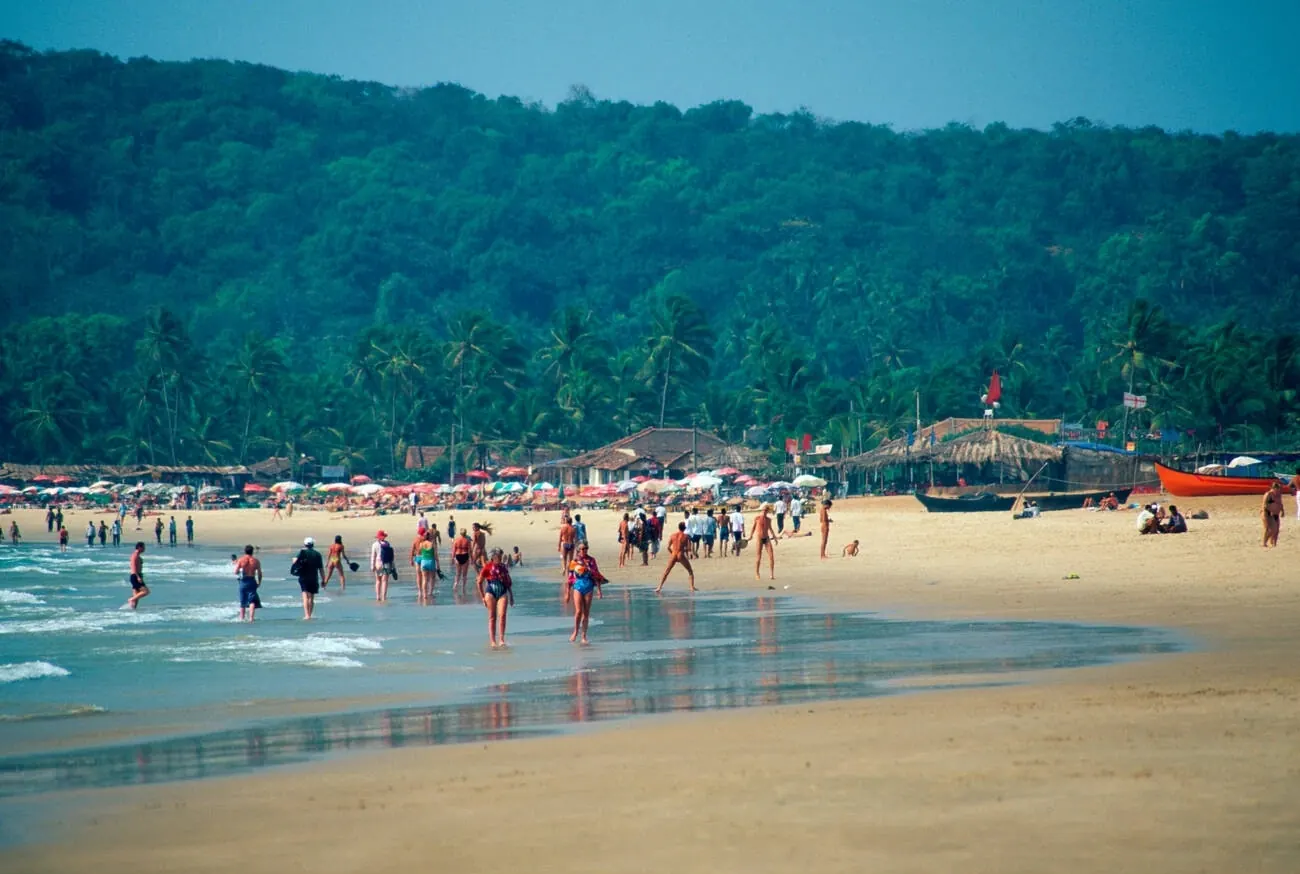
Anjuna Beach is best for sunsets and walks rather than long swims. The shoreline mixes sand with dark rocky outcrops. The northern end rises into low red laterite cliffs lined with cafés and viewpoints. The southern end, near Curlies, one of Anjuna's oldest beach shacks, has more sand and more beach restaurants.
Swim with care. Rocks, currents and changing depths make parts of the beach unsuitable for swimming, so follow lifeguard flags and stay out of the sea during the monsoon. Sunset from the cliff-top cafés is the classic Anjuna evening. In peak season, arrive 30–45 minutes early to get a table with a view.
Early mornings are the quietest time on the beach. The light is soft, the rocks are good for photos and you will share the sand mainly with walkers and fishermen.
The Anjuna Wednesday Flea Market
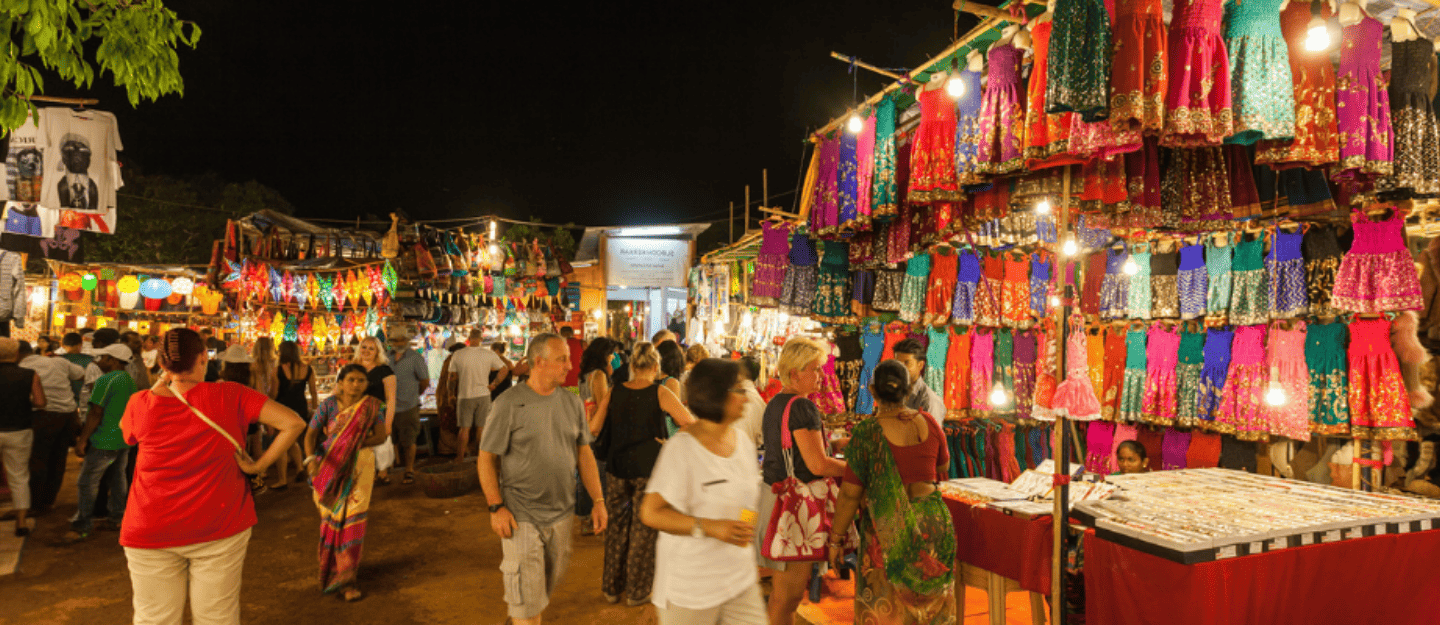
The Anjuna flea market is held every Wednesday during the tourist season, which usually means from about November to March or early April. The start and end dates vary from year to year, so check locally once you arrive.
The market takes over open ground near the southern end of Anjuna Beach and draws traders from across India. Stalls sell clothes, jewellery, bags, handicrafts, spices, textiles and souvenirs. Its roots go back to the hippie era, when, as the story goes, travellers sold their belongings to fund longer stays.
- Go in the late morning or late afternoon to avoid the midday heat.
- Bargain politely. First prices at many stalls leave room to negotiate.
- Carry cash as well as UPI, because not every stall takes digital payments.
- Wear comfortable shoes and a hat, and keep your phone and wallet secure in the crowds.
- Arrive early if you are driving, because parking near the market fills up fast.
If the market is the main reason for your trip, look at villas near the Anjuna flea market so you can walk or take a short ride. The Saturday Night Market in Arpora, about 15 minutes away, also runs in season. Night markets have sometimes been closed by the authorities in recent seasons, so confirm it is running before you go.
Cafés and Food in Anjuna
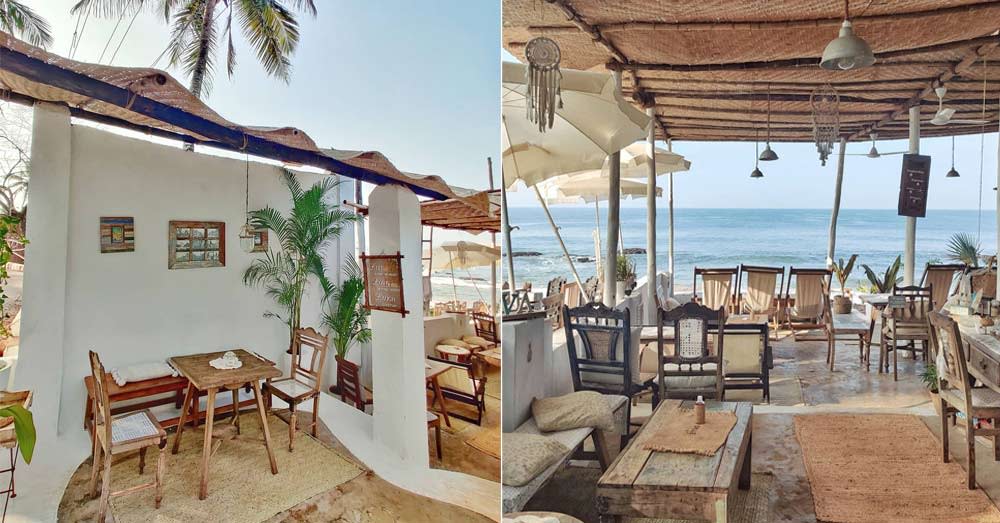
Anjuna's cafés are one of the main reasons people stay here. Most serve all-day breakfasts, salads, bakes and coffee alongside Goan and Indian food, and many have garden seating.
- German Bakery: one of Anjuna's oldest cafés, running since around the late 1970s, with garden seating, breakfasts and bakes.
- Artjuna: a garden café on Market Road in Monteiro Vaddo, known for Mediterranean food, with a lifestyle shop on site.
- Curlies: a long-running beach shack at the southern end of the beach, serving food by day and known for DJ nights in season.
- Cliff-top cafés: the northern end of the beach has several cafés built for sunset views.
For Goan food, order a fish thali, chicken xacuti or pork sorpotel at local restaurants away from the beach. Assagao, about 10–15 minutes inland, has a cluster of well-regarded restaurants. Florentine in Saligao, known for its chicken cafreal, is about 20–25 minutes away. Menus and hours change, and some cafés close or shorten hours in the monsoon, so check before you go.
Vagator, Chapora Fort and Nearby Sights
Anjuna is the best base for exploring the northern half of Bardez, and most of its sights are within 20 minutes. The table lists approximate drive times from central Anjuna; roads are narrow, so allow extra time in peak season.
| Sight | Type | Approx. time from Anjuna | Best for |
|---|---|---|---|
| Anjuna Beach | Beach, cliffs | About 5 min | Sunsets, walks |
| St Michael's Church | 17th-century church | About 5 min | Architecture |
| Anjuna flea market ground | Wednesday market (season) | About 5–10 min | Shopping |
| Vagator Beach | Beach below red cliffs | About 10 min | Views, sunsets |
| Assagao | Inland village | About 10–15 min | Restaurants, old houses |
| Chapora Fort | Hilltop fort ruins | About 15 min | River and sea views |
| Saturday Night Market, Arpora | Seasonal night market | About 15 min | Shopping, food stalls |
| Baga Beach | Busy beach | About 15–20 min | Water sports, nightlife |
| Mapusa Friday Market | Local market | About 20 min | Spices, produce |
| Morjim Beach | Quiet beach across the Chapora river | About 30–35 min | Long, quiet walks |
Vagator Beach
Vagator Beach lies just north of Anjuna, below red laterite cliffs. It has two parts: the main beach and Ozran Beach, often called Little Vagator, to the south. The cliffs make it one of the most scenic sunset spots in North Goa.
Chapora Fort

Chapora Fort sits on a hill above Vagator, overlooking the mouth of the Chapora river. The Portuguese rebuilt it in red laterite in 1617 on the site of an earlier fort, and it was abandoned in 1892. Only the outer walls remain, but the views over the river, the sea and Morjim are wide. The fort became widely known after the 2001 film Dil Chahta Hai. The climb is short but steep and rocky, so wear proper shoes and carry water, as there is little shade.
St Michael's Church
St Michael's Church is Anjuna's parish church, a Baroque building whose history goes back to the early 1600s. The village celebrates the feast of St Michael on 29 September. Dress modestly and visit outside service times.
Anjuna Nightlife
Anjuna's nightlife centres on a few long-running venues and the wider Anjuna–Vagator scene, which is known for electronic and trance music. Curlies and Shiva Valley at the southern end of the beach have long hosted DJ nights in season, and Hilltop in Vagator has hosted larger events and festivals.
Two things are worth knowing before you plan a night out. First, noise rules generally require outdoor amplified music to stop at 10 pm, so many late events move indoors or finish early. Second, after a deadly nightclub fire in Arpora in December 2025, authorities ran safety inspections and sealed several clubs in Anjuna and Vagator for failing to meet safety norms. Check that a venue is open and licensed before you go.
- Take a taxi home rather than riding a scooter after drinking.

If you’re heading out at night, it’s better to go with your group and keep your phone fully charged. Drugs are illegal in India, and police checks are common around popular party areas, so it’s best to stay on the safe side.
If you’re planning your Goa nightlife, our guide also compares Anjuna with Baga and some of the other popular areas in North Goa.
Getting Around Anjuna
The easiest way to get around Anjuna is usually by scooter or taxi. The area is spread out, and public transport options are limited. Some roads are narrow and winding, and traffic can get busy around Wednesday market days and on weekend evenings.
Scooter: Scooters are one of the most popular ways to explore Anjuna. Make sure you carry a valid driving licence, wear a helmet and avoid taking poorly lit roads late at night.
Taxi: You’ll find taxis around the main junctions and busy areas. App based services such as GoaMiles are also available in parts of North Goa. If you’re taking a taxi from a stand, it’s a good idea to confirm the fare before starting your journey.
From the airport: If you’re coming from Mopa Airport, the drive to Anjuna usually takes around 45-60 minutes. From Dabolim Airport, it generally takes about 50-60 minutes, although travel time can vary depending on traffic.
If you don’t want to rent a scooter or car, you can also check our guide on how to explore North Goa without a car.
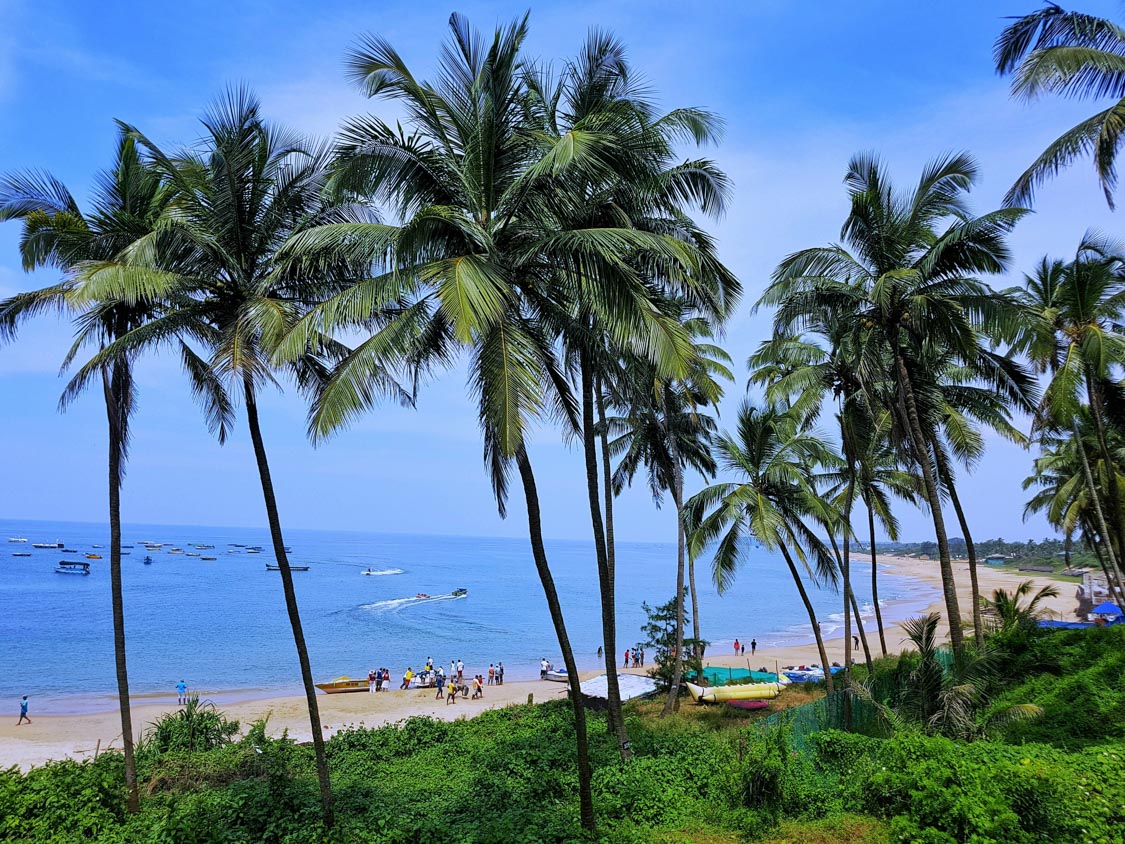
The best time to visit Anjuna is November to February, when the weather is dry, the flea market runs and cafés and venues are fully open. Each season suits a different kind of trip.
- November to February: peak season. December is the busiest month for events. Book early for Christmas and New Year.
- March to May: hotter and quieter. The flea market winds down around March or early April. Easter falls on 28 March 2027.
- June to September: monsoon. The market does not run, the sea is rough and some cafés close, but the village is green and calm.
- October: a shoulder month as cafés reopen and the rain eases.
Where to Stay in Anjuna
Anjuna is villa country. Most of its best stays are private homes set back from the beach, which suits groups who want space, a pool and quiet nights close to the cafés.
Vilmaris Anjuna Woods is a 4 BHK villa in Mazal Waddo, about 800 m from Anjuna Beach, for up to 8 guests. It starts from ₹35,000 per night for the whole villa and has an outdoor sitting area.
Vilmaris Courtyard Villa is a 5 BHK villa in Anjuna for up to 10 guests, starting from ₹50,000 per night for the whole villa, with a private Jacuzzi.
Both villas have a private pool, full air-conditioning, a villa manager, housekeeping, a chef on call, a BBQ setup, pickup and drop, and 24×7 power backup. Rates vary by season. Our comparison of Anjuna Woods vs Courtyard Villa helps you choose between them. Book direct at stayvilmaris.com or on WhatsApp at +91 99710 26666.